SoulCert
Decentralised verifiable credential registry using consensual soul-bound tokens on Ethereum, with encrypted IPFS storage and role-based verification.
Tech Stack
SoulCert is a decentralised verifiable credential registry built for QUT IFB452 Blockchain Technology. Academic and professional qualifications usually live in institution-controlled databases that are slow to verify and hard to trust long term. SoulCert issues credentials as consensual soul-bound tokens on Ethereum: they are non-transferable, tamper-evident, and only created after the holder explicitly accepts.
Architecture
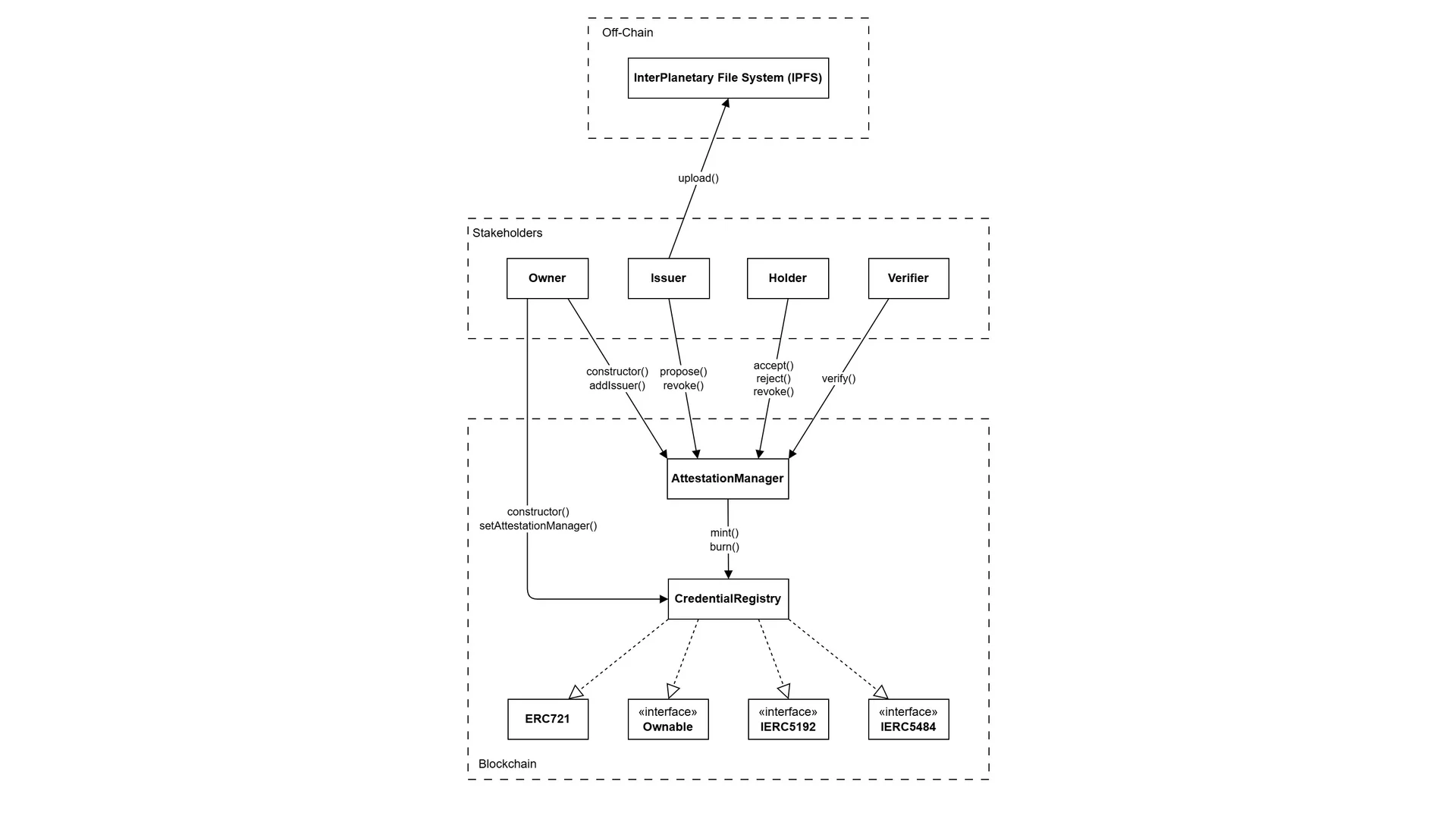
The system uses a Manager / Ledger pattern to separate business logic from token storage:
- AttestationManager — the single entry point for all stakeholders; handles proposals, acceptance, revocation, and verification
- CredentialRegistry — stores soul-bound tokens and enforces that they cannot be transferred; only the manager can write to it
- IPFS — holds encrypted credential data off-chain; only a content reference and hash appear on-chain
Four stakeholders interact through the system:
| Role | Responsibility |
|---|---|
| Owner | Deploys the system and authorises issuers |
| Issuer | Proposes credentials to holders |
| Holder | Accepts or rejects proposals; can revoke per policy |
| Verifier | Validates a credential against on-chain records |
Credential lifecycle
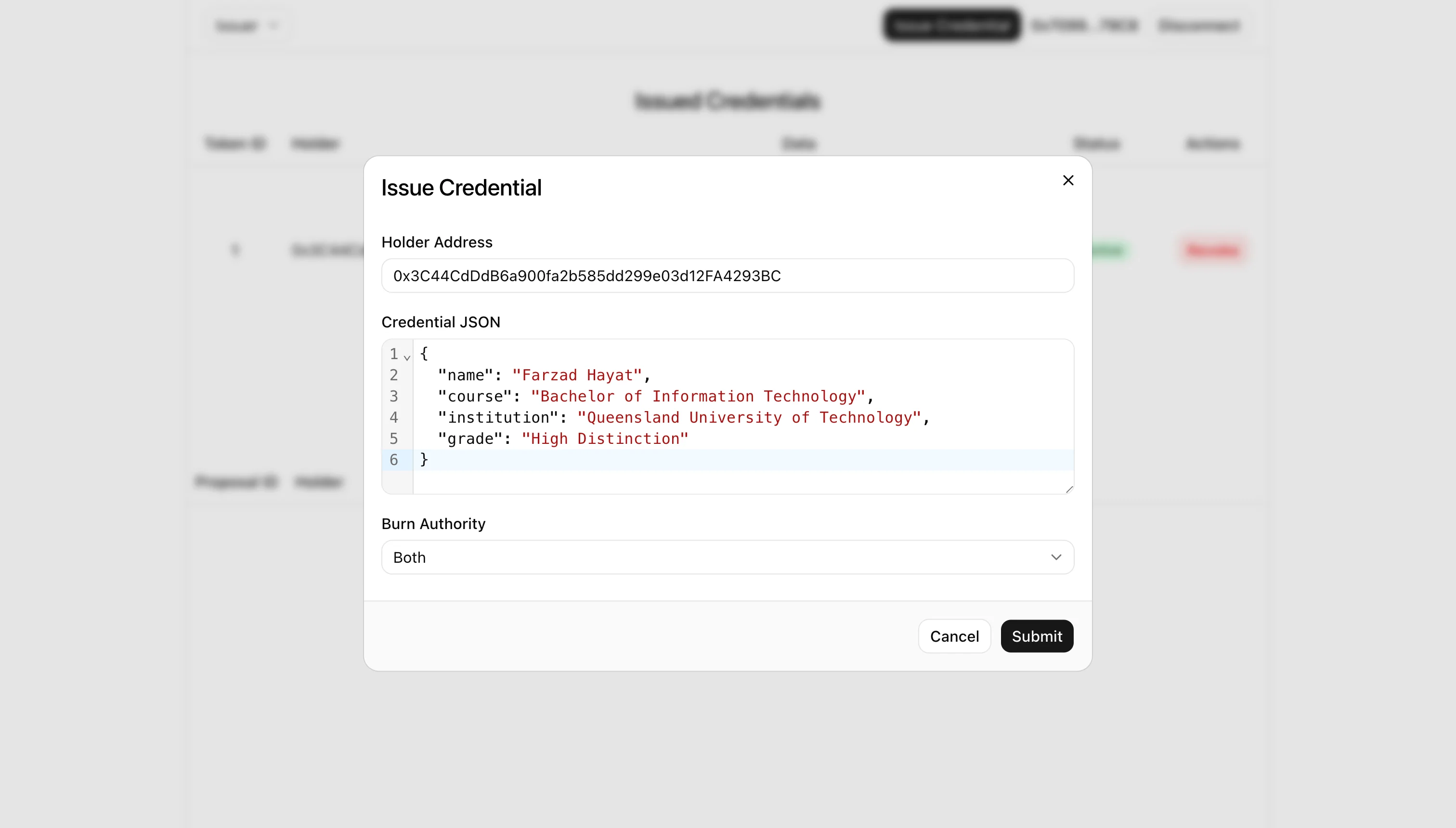
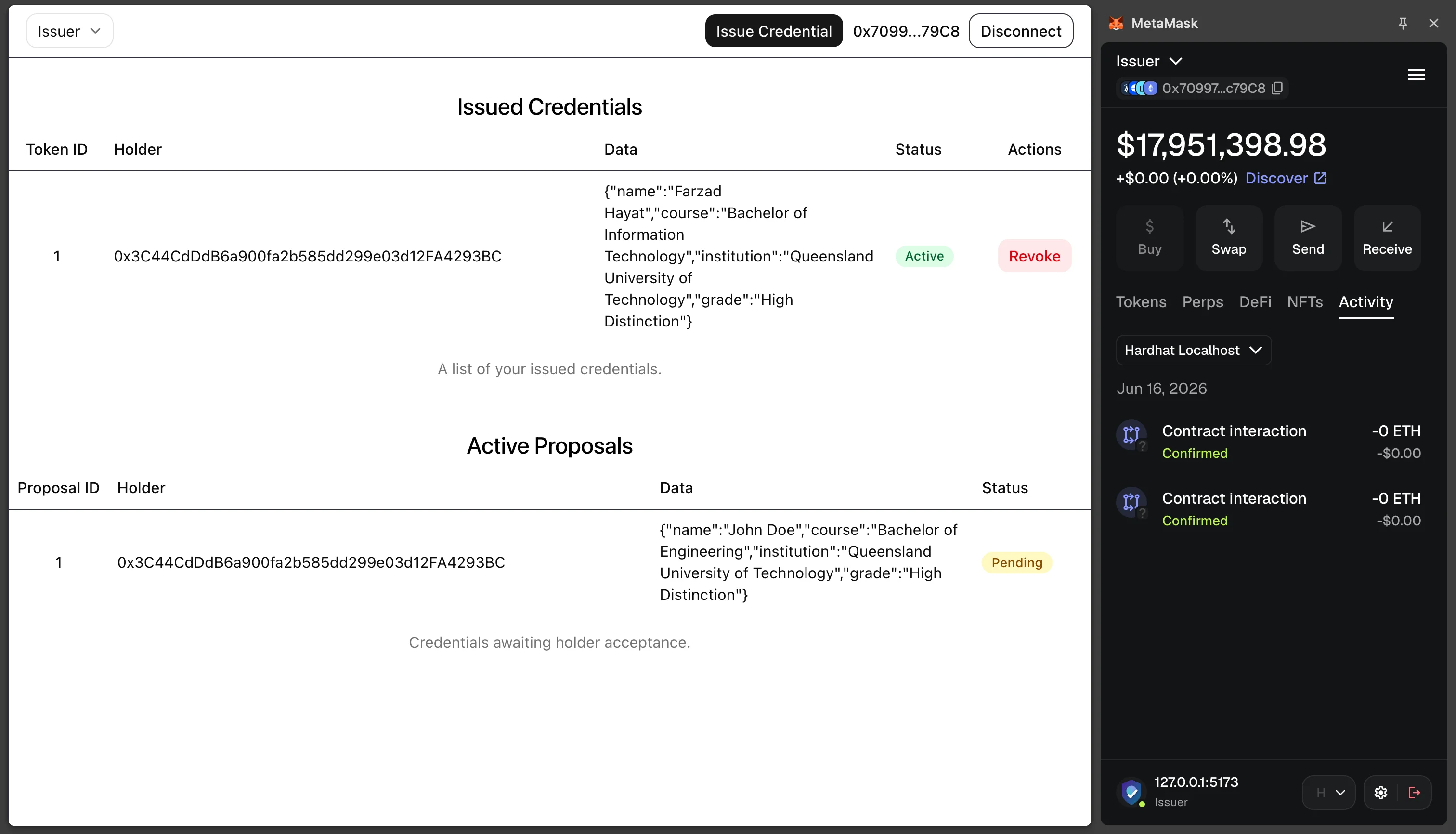
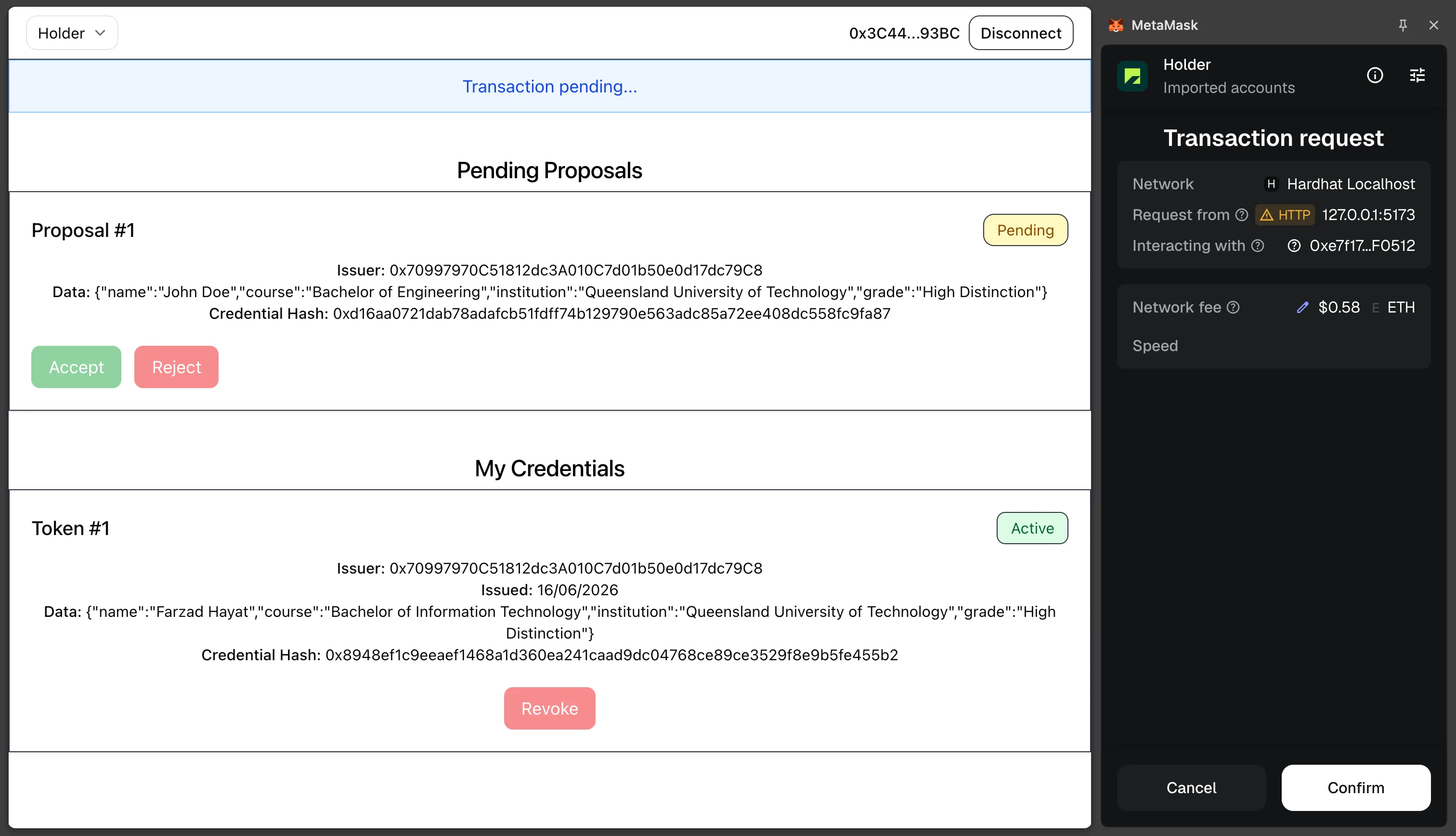
Issuance — an issuer proposes a credential to a holder, who must accept before a token is minted. Rejection discards the proposal with nothing created.
Revocation — an authorised party can burn a token when the burn policy agreed at issuance allows it.
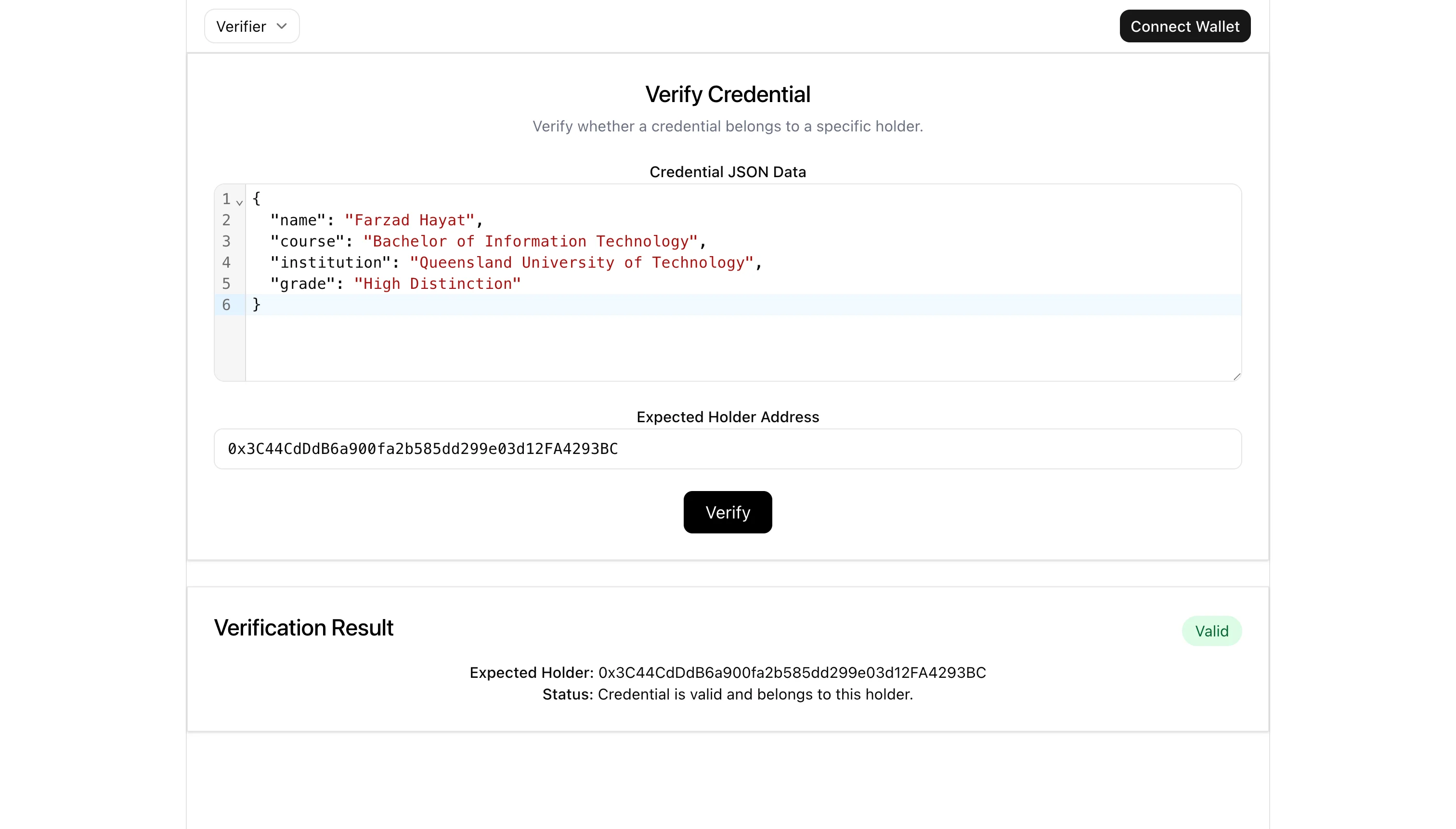
Verification — a verifier checks that a credential hash matches what is stored on-chain and that the token is still held by the expected wallet. The holder shares the credential document off-chain; verification itself happens on-chain.
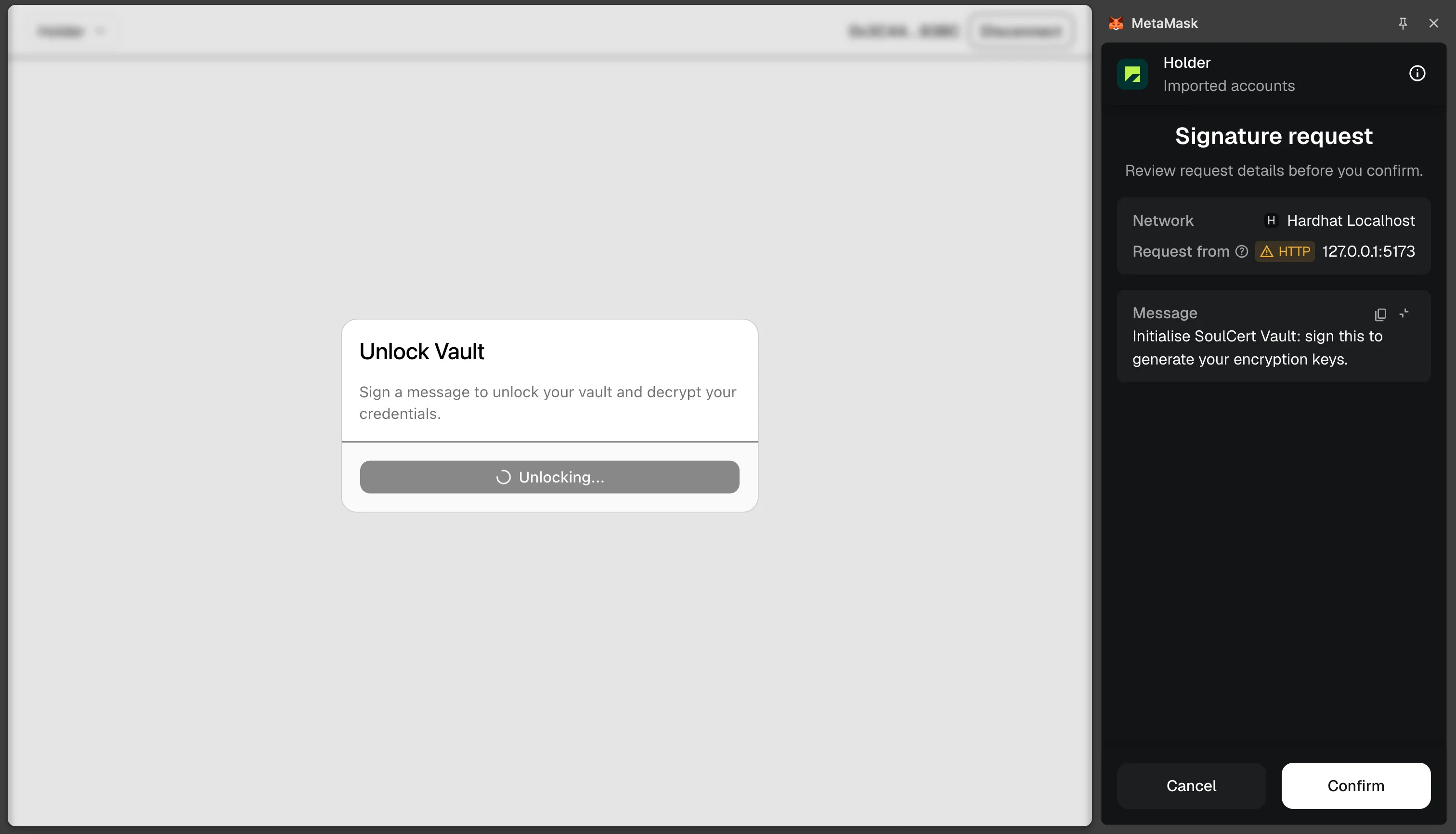
Privacy — full credential content never touches the blockchain. Holders decrypt their documents locally using keys derived from their wallet.
What I built
A React DApp with separate views for issuers, holders, and verifiers, connected to the smart contracts via MetaMask on a local Hardhat network. The project includes a full test suite covering issuance, rejection, revocation, and verification.
Gallery